
By Juan Garcia, Director of Racquets, San Dieguito Tennis Club
Most players look for ways to improve their game. The good news is that you don’t need complicated strategies or advanced techniques to start playing better tennis. In many cases, improvement comes from focusing on a few simple principles that help you play more consistent and confident tennis. Here are six practical keys that can help you elevate your performance on the court.
Focus on the ball and stay relaxed
One of the most common mistakes recreational players make is playing with too much tension. Tight muscles often lead to rushed swings and inconsistent shots. A simple habit that can immediately improve your tennis is focusing on watching the ball carefully, especially from the bounce to the moment of contact. At the same time, try to keep your swings fluid and relaxed.
During warm-up, avoid rushing to hit winners. Instead, use those first few minutes to find your rhythm, feel your timing, and settle into the match. Players who use the warm-up to prepare mentally and physically tend to start matches more confidently.
Don’t beat yourself
At the recreational level, most matches are not won with spectacular shots; they are won by the player who makes fewer mistakes. The two most important rules in tennis are simple: get the ball over the net and keep it inside the lines. It sounds obvious, but many players forget this when they try to hit winners too early in rallies.
Instead of trying to end points quickly, focus on keeping the ball in play and making your opponent hit one more shot. You may be surprised how many points you win simply by staying consistent.
Before trying to hit aggressive winners, first establish a comfortable rally pace. Play your game and only increase the level of risk when the opportunity presents itself.
Start points with high-percentage tennis
The beginning of rallies (and especially the start of matches) is a great time to focus on consistency. A few simple habits can make a big difference:
- Aim your returns safely toward the middle of the court.
- Use spin on your serves to increase your first-serve percentage.
- Rally crosscourt to build rhythm and control the point.
Crosscourt shots travel over the lowest part of the net and provide more court space to land in. This makes them naturally safer for building rallies.
When players start a match trying to do too much too early, errors tend to pile up. Starting solid allows you to relax, find your timing, and gain confidence as the match progresses.
Give yourself more margin over the net
Many players hit the ball too close to the net. When the margin is small, even a well-struck shot can turn into an error. A helpful guideline is to aim at least two to three feet above the net on most groundstrokes. This added height provides more safety and allows you to use spin to bring the ball back down into the court.
Shots that clear the net comfortably often land deeper, which naturally pushes your opponent farther back and gives you more time to recover. In tennis, a little extra margin often leads to much greater consistency.
Play to your strengths
Every player has certain shots they feel more comfortable hitting. Some players enjoy rallying from the baseline, others prefer coming forward to the net, and some rely on strong serves or consistent backhands.
Improvement comes faster when you build your game around the shots you trust the most. If you enjoy approaching the net, look for opportunities to move forward. If your forehand is your strongest shot, try to position yourself to use it more often. Playing to your strengths not only increases your effectiveness but also builds confidence during matches.
Pay attention to your opponent
Tennis is not just about hitting the ball; it’s also about observing what is happening on the other side of the net. As you play, look for patterns in your opponent’s game. Do they struggle with high balls? Do they favor one side on returns? Are they uncomfortable when pulled wide?
Recreational matches often swing when one player starts noticing these tendencies and adjusts accordingly. Sometimes a small adjustment (such as hitting more balls to a weaker side or using a well-timed lob) can make a big difference.
Final thought
Improving your tennis doesn’t require complicated strategies or perfect technique. In most cases, better results come from doing the simple things more consistently: watching the ball carefully, keeping the ball in play, giving yourself margin, and playing to your strengths.
Focus on these fundamentals during your next match or practice session, and you’ll likely find that your game becomes more reliable, more confident, and much more enjoyable.
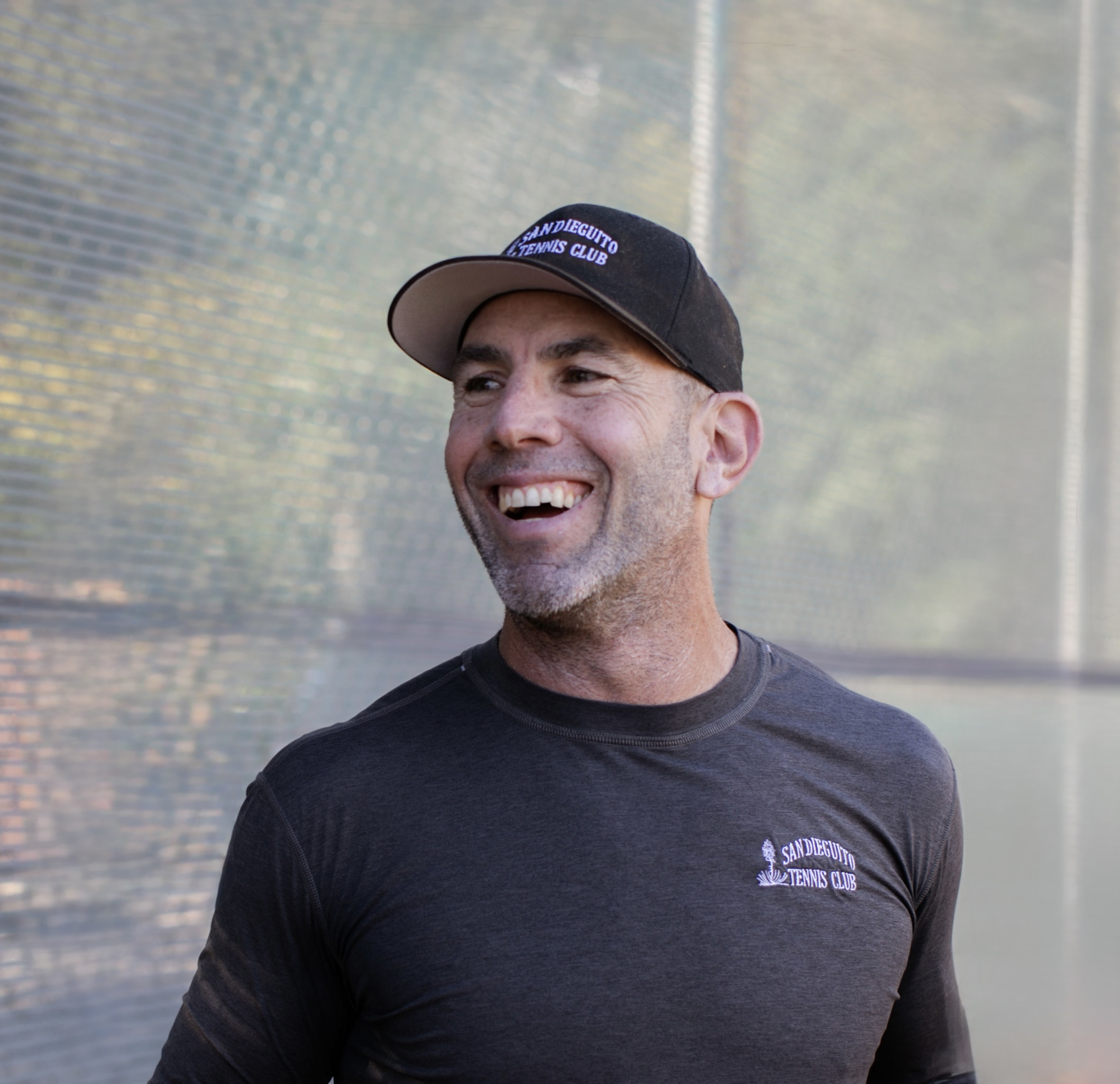 ARA TEACHING PROFESSIONAL SPOTLIGHT: Juan Garcia, Director of Racquets, San Dieguito Tennis Club
Submitted by the American Racket Sports Association.
Why are you a member of the ARA? Because of the member benefits and the networking opportunities.
What inspired you to be a tennis coach? Like many coaches, my journey started as a player. But at some point, the satisfaction shifted from winning matches to helping others improve. Seeing someone develop confidence, solve problems on the court, and enjoy the game became more rewarding than any result I achieved myself.
What is your favorite memory of being a tennis coach in Atlanta? I haven’t coached in Atlanta, but I do have a connection to Georgia from my time at Airborne School at Ft. Benning. That experience helped shape my approach to discipline and resilience, which I bring into my coaching today.
How has tennis impacted your life? Tennis has had a profound impact on my life. It has been more than a sport; it has been a vehicle for personal growth, discipline, and purpose. Through tennis, I’ve learned how to manage adversity, stay committed to long-term development, and perform under pressure.
What is your proudest achievement? My proudest achievement is being able to contribute to the growth of others through both coaching and thought leadership. Writing and sharing my perspective on coaching and leadership has allowed me to extend my impact beyond the court, while continuing to develop players and programs in person.
What is one fun fact about you that most people would not know? I’ve always been drawn to challenges outside of tennis, which has influenced my perspective on coaching and leadership. I also spent a year playing college baseball in Mexico, an experience that broadened my understanding of competition, teamwork, and adaptability.
Who is your favorite professional tennis player and why? My favorite tennis player is Pete Sampras. I’ve always admired his professionalism, composure under pressure, and ability to perform on the biggest stages. His serve-and-volley game and efficient style of play had a big influence on how I view the game and approach it as a coach.
What advice would you give young coaches in the industry? Focus on developing people, not just players. Technical knowledge is important, but your ability to communicate, build relationships, and create a positive environment will ultimately define your impact. Be patient with your growth, stay curious, and invest in continued education.
What do you do when you’re not coaching tennis? Outside of coaching, I enjoy staying active, spending time with family, and continuing to learn. I’m always looking for ways to grow, whether that’s through reading, writing, or exploring ideas that can translate back into my work as a coach and leader.