By Chris Wolfe, Director of Pickleball, Atlanta National Pickleball Club
A pickleball speed-up is an aggressive shot hit during a dinking rally at the kitchen line to surprise opponents, shift the momentum of the point, and force a weak reply or pop-up.
Let their speed-up work for you
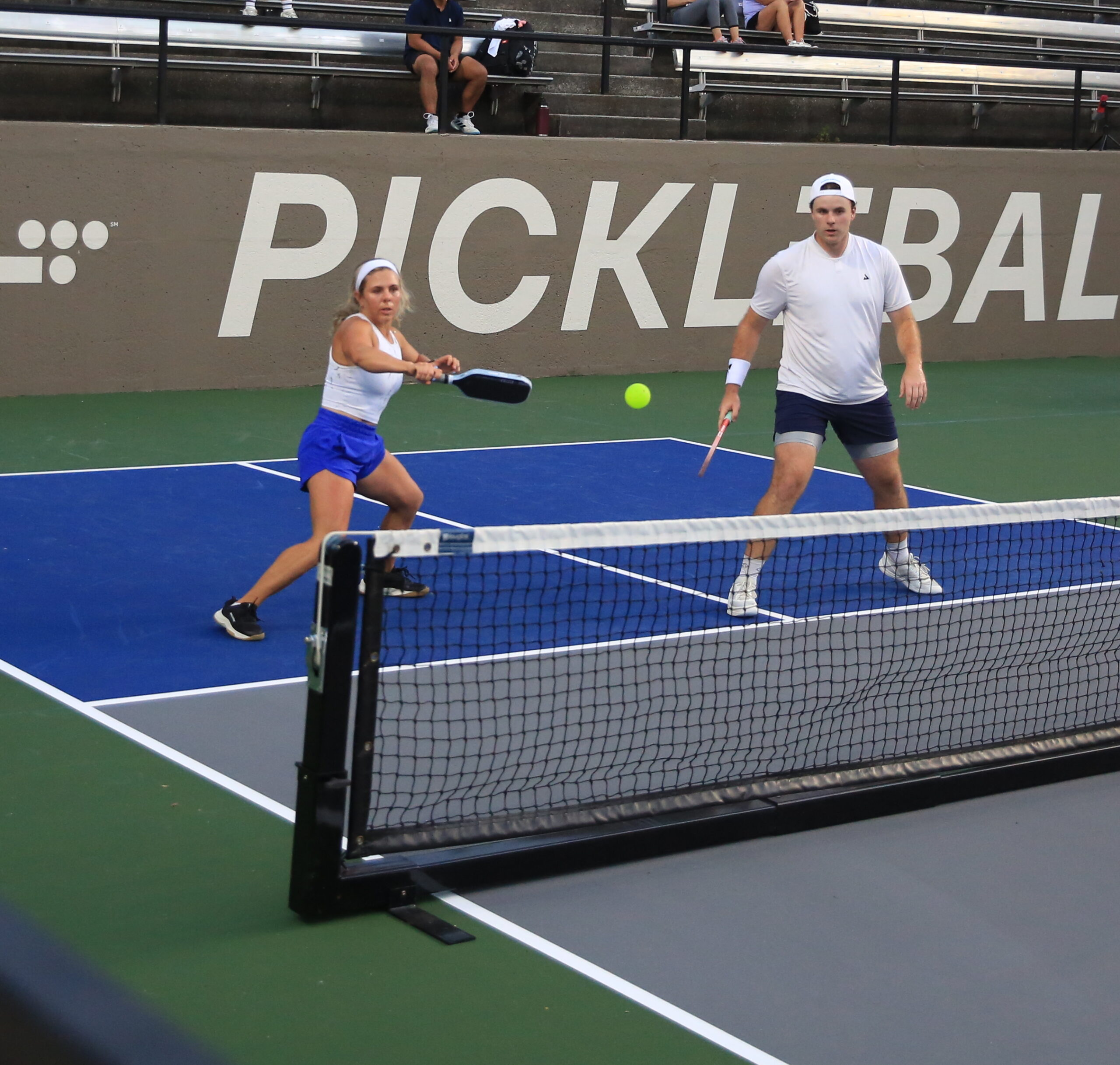
One thing that has really changed in pickleball is how fast the game has gotten, especially at the kitchen line. Mix that with how “poppy” the paddles are now and the faster balls everyone is using, and you really don’t need to swing much when someone speeds up the ball. Keep your paddle out in front, get behind the ball, and use a short, compact motion. They’re already giving you the pace. Your job is to stay balanced and try to get that counter shot back down at their feet. If someone attacks a bad ball, don’t just be happy getting it back. Make them pay for it.
A great way to practice this is to have a friend speed the ball up to one specific spot. Even though you know where it’s going, watch their paddle and start learning what that speed-up looks like before the ball leaves it. Once you’re comfortable, have them attack a few different spots. Finally, have them speed it up anywhere without telling you where it’s going. You’ll start picking up little clues from their paddle that can help you react faster in a real game.
Stop hiding speed-ups
There was a time when you had to hide every speed-up. If you didn’t, your opponent simply had too much time to react because the ball did not come off the paddle with enough pace to be dangerous unless it was disguised. That game has changed.
Today, even when your opponent knows a speed-up is coming, the ball still arrives quickly. They may cheat up a bit or get ready early, but that is no longer the deciding factor. What matters more is where you hit it and how well it sets you up for the next ball.
You can still be sneaky, just in a different way. Instead of hiding the swing, change the pace. Off-paced speed-ups can be incredibly effective because when an opponent is ready and calibrated for a hard ball, a slightly softer attack throws off their timing. That softer speed-up often stays lower, making it harder for them to clean counter or hit down on the ball.
Both hard and soft speed-ups are valuable tools. Hard speed-ups can overwhelm opponents, while softer speed-ups create hesitation and awkward contact. The best players are able to use both and choose the right option at the right time. In today’s game, the speed-up is less about disguise and more about intent, placement, and tempo.