By Mique Curry-Edwards, Director of Junior Programming, TPC Sugarloaf
As a tennis player and coach, I make a living with my hands, often thinking of my racquet as an extension of my right arm. With that in mind, it can be easy to overlook an equally important part of the game — the relationship between the dominant and non-dominant hands.
For many of my students, this is a concept they easily forget. Tennis is not a one-sided sport. It requires balance, coordination, and unity between both sides of the body. To hit successful shots, the left and right sides must work together.
The non-dominant hand helps create balance, supports preparation, contributes to racquet control, and allows the body to move efficiently through each stroke. I will demonstrate the importance of the non-dominant hand and share key tips for the next time you step on the court.
The forehand
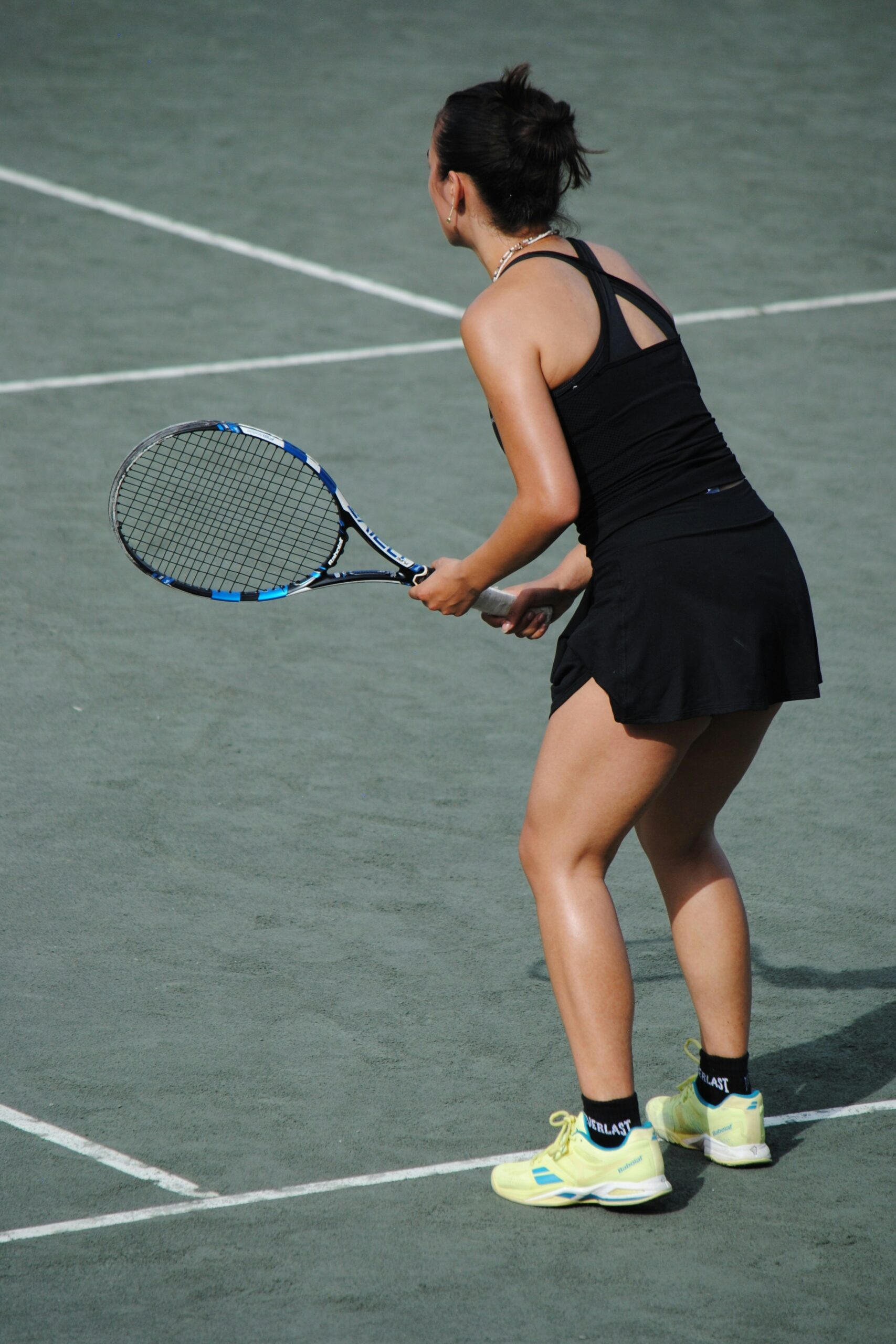
The forehand is the most frequently used shot in tennis, making the use of the non-dominant hand especially important. During the preparation and backswing, keep the non-hitting hand on, or near, the throat of the racquet for as long as possible. Doing so encourages a proper shoulder turn, resulting in greater rotational power and reducing the need to rely solely on the hitting arm for pace.
As the ball approaches, extend the non-dominant hand toward your intended contact point. This helps establish and maintain the appropriate amount of spacing between your body and the ball, giving you a more consistent, effective, and repeatable contact point.
As you swing through the ball, allow the non-hitting arm to tuck away toward your shoulder and ultimately catch the racquet at the end of the follow-through. This encourages a complete uncoiling of the shoulders, helping to maximize both power and efficiency throughout the swing.
The two-handed backhand
By contrast, the two-handed backhand offers players a more natural, almost unconscious, mechanism for coiling the body. The magic of the top hand on the two-handed backhand lies in its ability to accelerate and drive through the stroke, much like hitting a forehand with the non-dominant hand. Simply put, the top hand serves as the driving force of the shot, while the bottom, dominant hand, provides support, stability, and control.
When the bottom hand begins to take over the swing, the backhand can often feel stiff, reducing both acceleration and freedom of movement. This can prevent the shoulders from fully uncoiling through the stroke, ultimately diminishing power, accuracy, and feel. By allowing the top hand to lead, players can create more space through contact and extend more freely into the follow-through. This encourages a complete uncoiling of the shoulders and allows the non-dominant hand to play an active and leading role throughout the stroke.
The volley
Both the forehand and backhand volleys require short, compact motions, and the non-dominant hand plays a key role in helping to maintain control of the racquet face.
On the forehand volley, allow both the hitting and non-hitting arms to move toward the incoming ball, as if you are trying to reach out and catch it in front of your body. Keeping the non-dominant hand near the racquet can help to curb excessive swinging and aid in preventing the racquet head from dipping below the height of the net.
The role of the non-dominant hand is perhaps even more important on the backhand volley. During the preparation, use the non-dominant hand to prevent an excessive backswing by keeping the racquet face oriented toward your intended contact point. In other words, use the non-hitting hand to keep the racquet from drifting or dipping too far behind you.
Just before contact, allow the arms to separate, with the non-hitting arm extending backward into the court. This creates a natural counterbalance while also encouraging you to maintain your shoulder turn through the shot. By allowing the non-dominant hand to help control the preparation and balance the swing, you can create a more compact, stable, and efficient volley.
The serve
Perhaps the most technically complex motion in tennis, the serve requires a harmonious balance between the hitting and non-hitting hands. One of the most significant indicators of a successful serve is not how hard you swing or how explosively you use your legs, but rather the placement of the toss with the non-dominant hand. When the toss is placed correctly, the other elements of the service motion become significantly more efficient, allowing the body to naturally move up to the ball.
It is also important to recognize that the tossing arm should not collapse too early. Dropping your arm before initiating the swing can lead to a loss of height over the net and decreased accuracy. Instead, allow it to controllably tuck down toward your chest. This helps to maintain an upright serving posture while allowing the body to stay balanced as you accelerate up through contact. As with the other strokes, the non-dominant hand is not simply along for the ride; it plays an important role in creating an efficient and repeatable service motion.
Ultimately, it is important to remember that the non-dominant hand is an integral component to the success of every shot. From preparation and balance to control and power, both sides of the body must work together. Hopefully, the next time you step on the court, you will discover an untapped skill, as well as a newfound appreciation for your non-dominant hand.
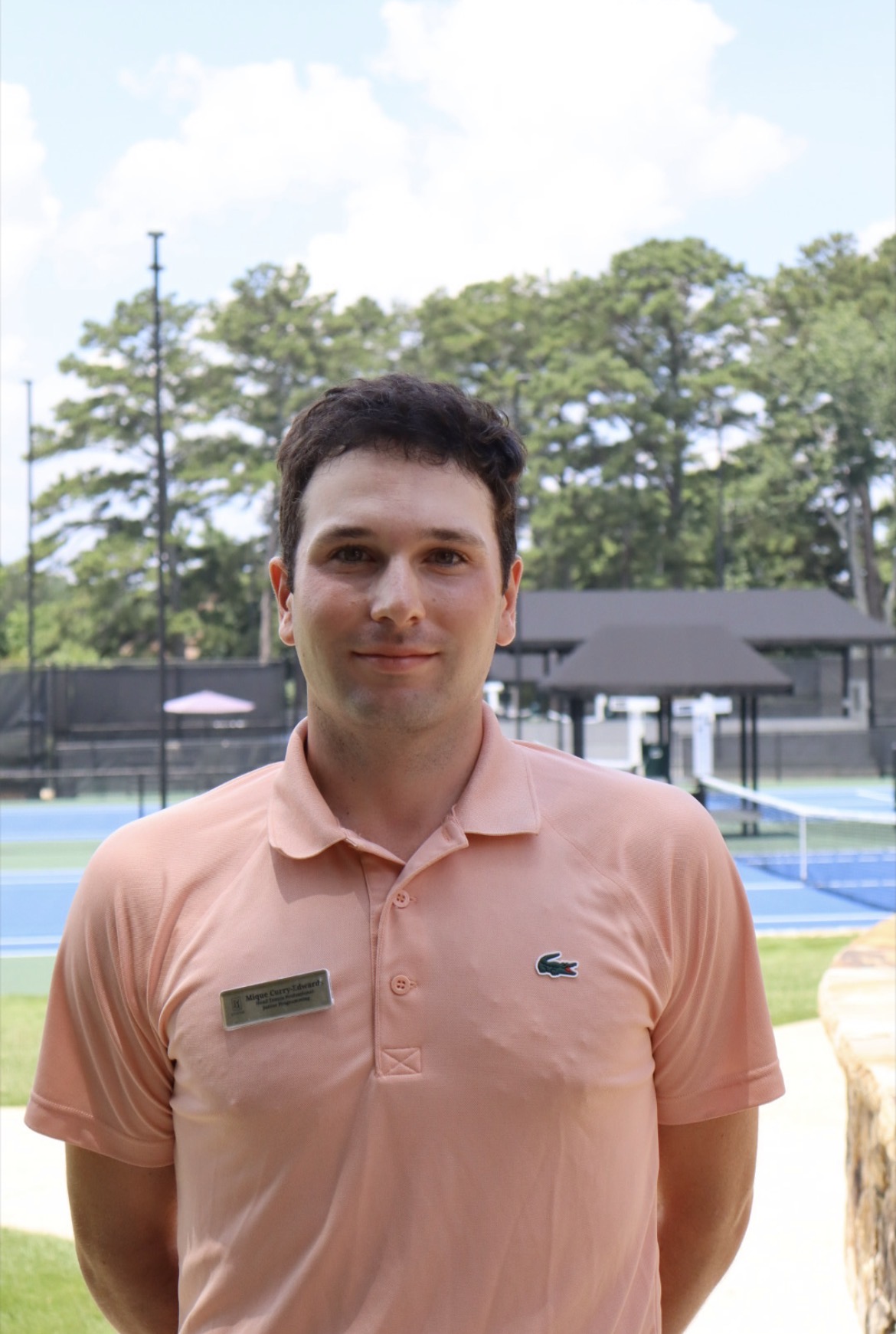
ARA TEACHING PROFESSIONAL SPOTLIGHT: Mique Curry-Edwards, Director of Junior Programming, TPC Sugarloaf. Submitted by the American Racket Sports Association.
Why are you a member of the ARA? I have found the ARA to be a phenomenal resource for tennis professionals.
What inspired you to be a tennis coach? Tennis has been a passion of mine since I was young and I love to share that passion with others.
What is your favorite memory of being a tennis coach in Atlanta? It’s hard to pinpoint one moment, however seeing an idea finally click for one of my students and the excitement in their eyes is incredibly rewarding.
How has tennis impacted your life? What began as a childhood hobby has transitioned into a lifelong career. Tennis has provided me with work that is deeply fulfilling.
What is your proudest achievement? When I was recognized as employee of the month at TPC Sugarloaf.
What is one fun fact about you that most people would not know? I am a hopeless Seattle Mariners fan.
Who is your favorite professional tennis player and why? My favorite player is Roger Federer. He is the reason I fell in love with the sport.
What advice would you give young coaches in the industry? Get comfortable putting your name out there and introducing yourself to the right people.
What do you do when you’re not coaching tennis? When I’m not coaching, I’m usually at home spending time with my fiancée.